research
My research explores computer vision & how AI systems understand the world around them. I’m interested in how these systems can combine visual and auditory information to reason about real-world environments. Through this work, I hope to develop AI that can better perceive, understand, and interact with the physical world.
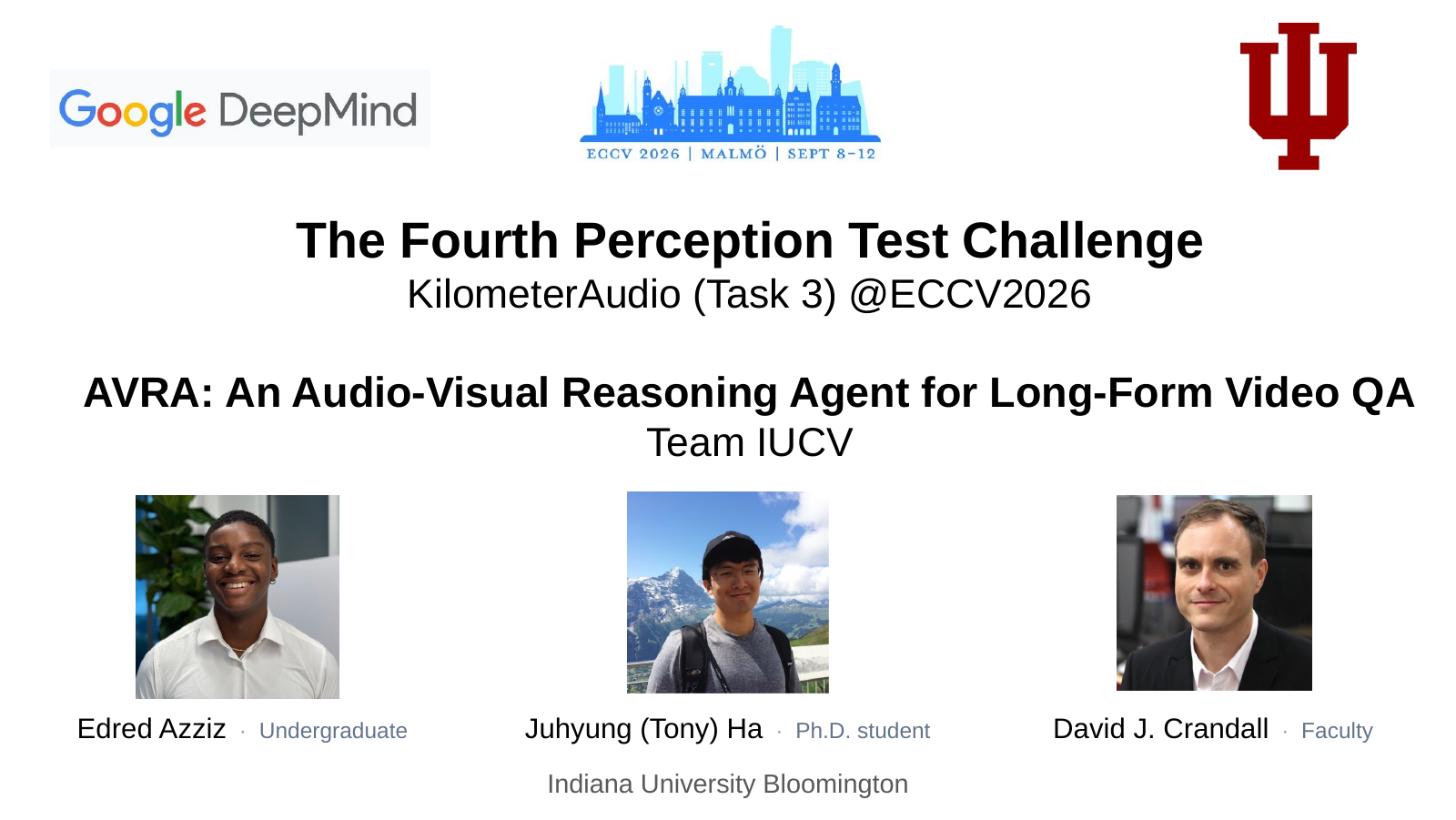
AVRA: An Audio-Visual Reasoning Agent for Long-Form Video QA
AVRA is a training-free agent that answers questions about long videos by combining visual and auditory evidence. It uses a searchable index of sounds, objects, and on-screen text to locate relevant moments, then inspects the original audio and video to reason through each question. A human-in-the-loop workflow refines how the agent gathers, records, and checks its evidence without retraining the underlying models.
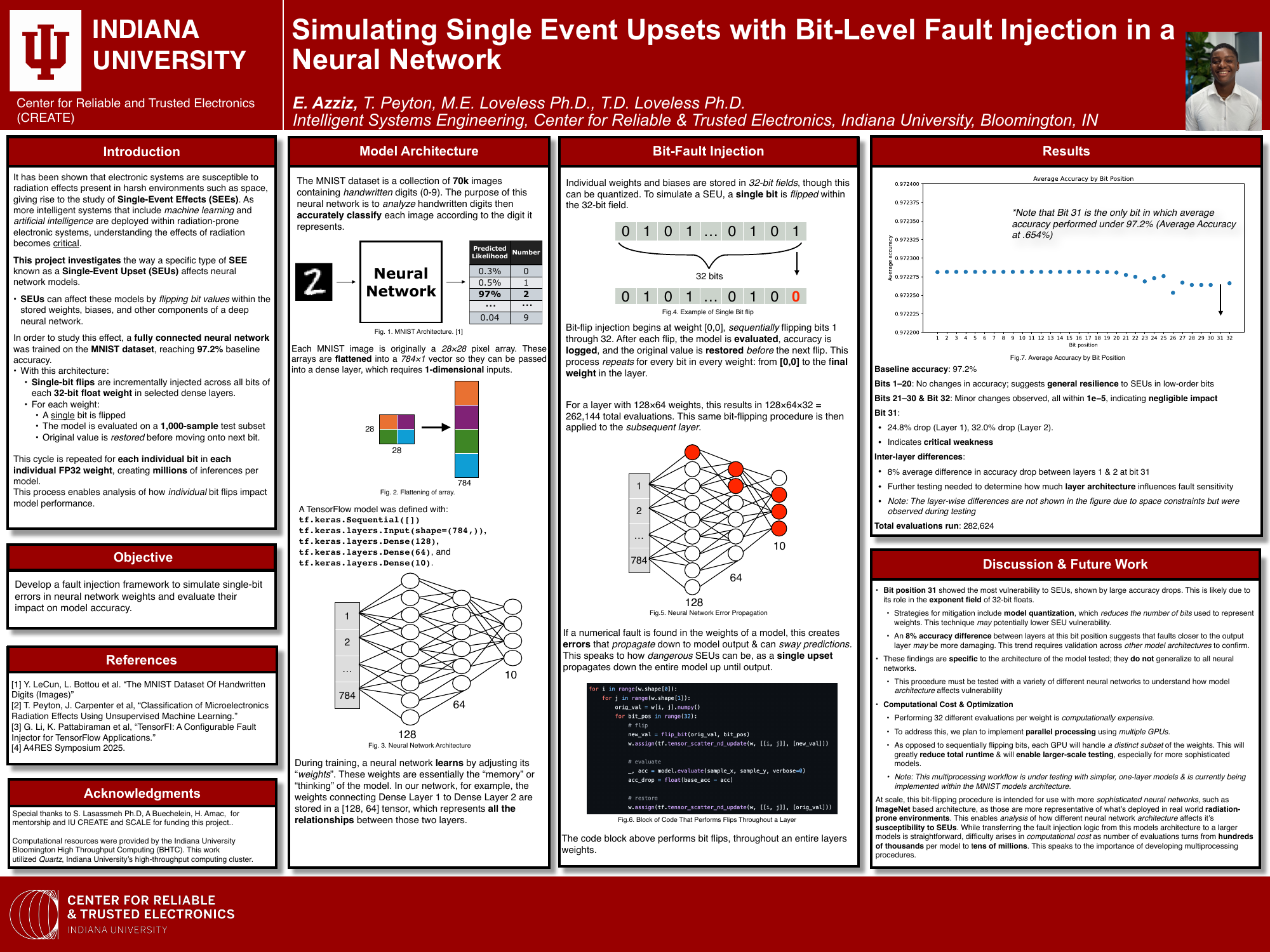
Simulating Single Event Upsets with Bit-Level Fault Injection in a Neural Network
How resilient are neural networks to the bit flips that radiation can cause in electronic systems? This project simulates single-event upsets by flipping individual bits in the weights of a neural network trained to recognize handwritten digits. By measuring how each fault affects accuracy, we examine which bit positions and layers are most vulnerable, helping inform the design of more reliable AI for radiation-prone environments.